Evidence led
Clinical findings are considered together, reviewed and documented.
CARE AT ELEPHANT SCALE
Elephant healthcare asks for specialist knowledge, purpose-built facilities and time. Every clinical decision must consider an animal’s history, mobility, behavior and relationships—not only a test result.
At Phuket’s first elephant hospital, veterinarians, caregivers, mahouts and external specialists combine evidence with close daily observation. The goal is thoughtful care delivered as calmly and cooperatively as each patient allows.
Clinical findings are considered together, reviewed and documented.
Handling and access are adapted to the patient and procedure.
Complex cases can bring together expertise from across Thailand.
Explore the hospital
Select a numbered point to understand how each purpose-built area supports examination, treatment and rehabilitation.

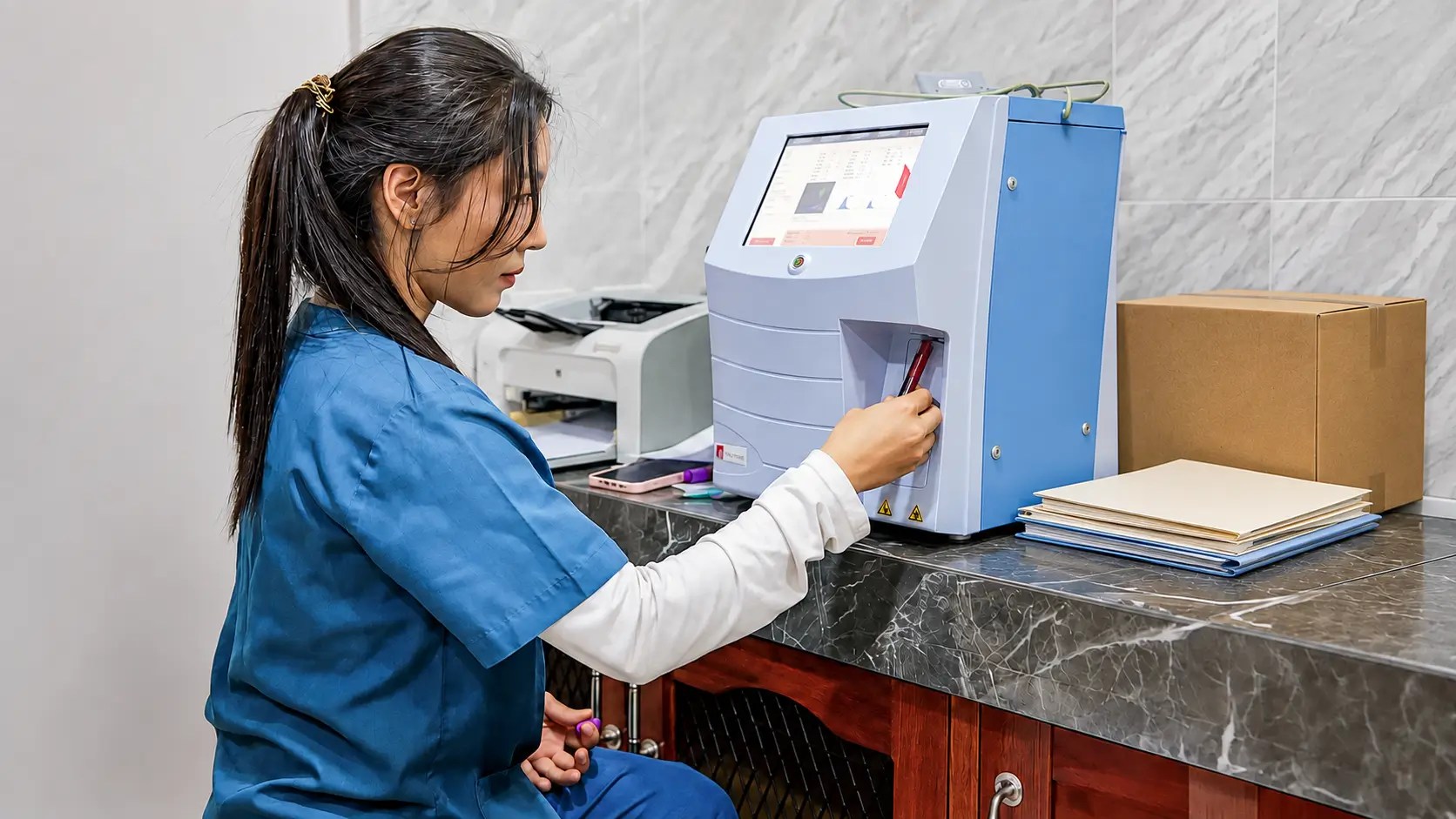
On-site insights for faster clinical decisions.
Our CBC analyzer helps the team examine blood samples, support urgent diagnoses and monitor treatment response. Results are considered alongside physical examination, history and behavior.
Patient stories
Every patient brings a distinct clinical journey—and receives the same commitment to individualized care.
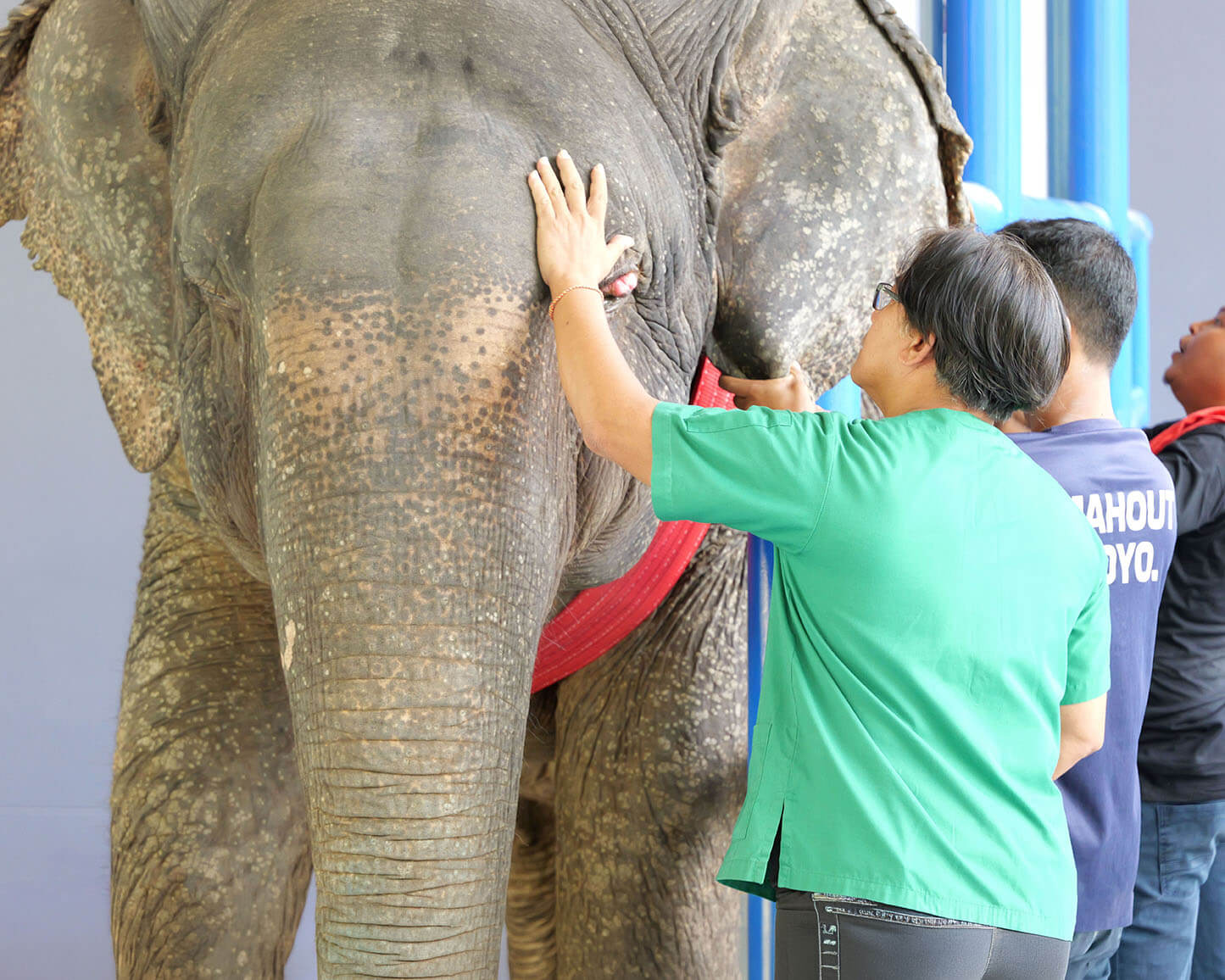 Ophthalmic care
Sri Nual received treatment at the hospital for a mass that had developed on her eyelid. Because of its location close to the eye, treatment required careful intervention to protect the surrounding tissue and preserve normal function.
The people behind the care
Clinical evidence is only part of the picture. Our veterinary team works alongside the mahouts who know each elephant’s routine, appetite, movement and character—turning daily observation into better-informed care.
Lead Veterinarian
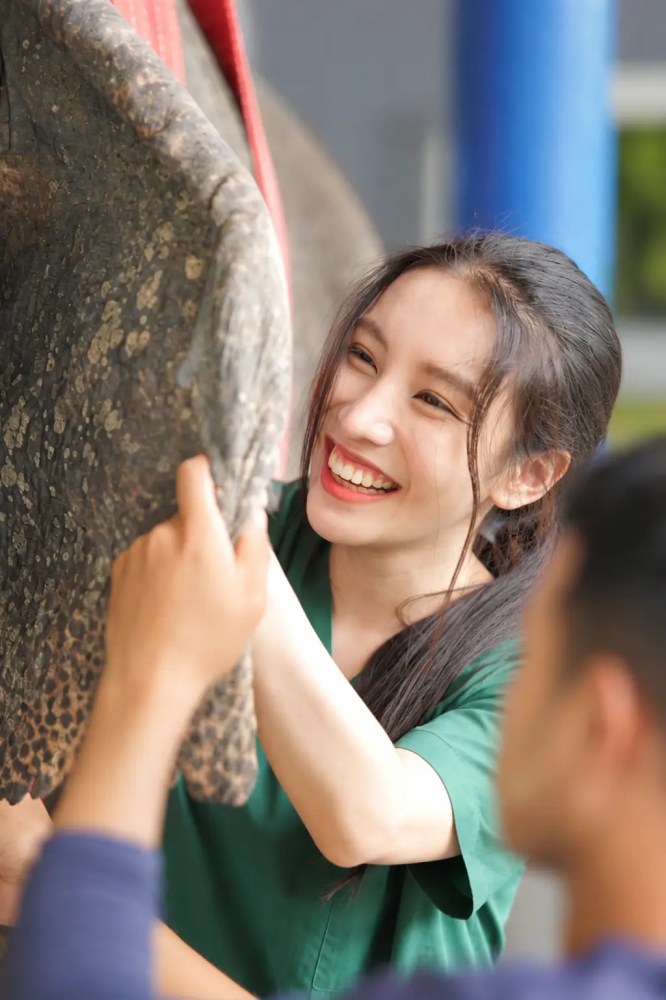
Dr. Bow (Dr. Ratchadaporn Srisamut) graduated in Veterinary Medicine from Rajamangala University of Technology Srivijaya, Nakhon Si Thammarat Campus, completing the six-year veterinary program before focusing her career on elephants. Before joining Phuket Elephant Sanctuary, she spent around five years at Krabi Elephant Hospital, treating elephants across Southern Thailand and gaining extensive experience in foot and nail problems, gastrointestinal illness, eye conditions and EEHV. Today, as an on-site veterinarian at PES, Dr. Bow provides daily clinical care and monitoring for resident elephants and hospital patients, including complex cases such as Diao’s severe leg fracture.
Veterinarian
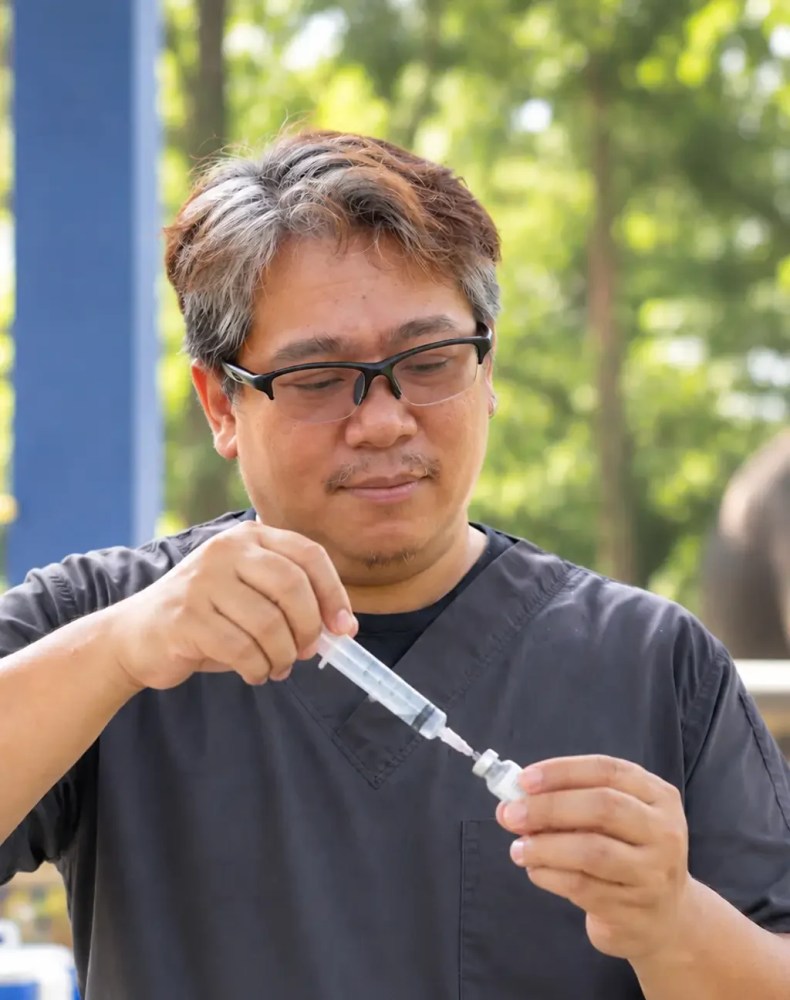
Dr. Toon (Dr. Ponrapat Waipanya) earned his Doctor of Veterinary Medicine degree from Mahanakorn University of Technology and completed further training in exotic-animal medicine at Kasetsart University. His professional experience encompasses elephant, exotic-animal and companion-animal care, including routine health assessments, treatment planning, preventive medicine and clinical record management. He also brings experience in coordinating veterinary teams, managing medicines and medical supplies, and improving clinical workflows. At Phuket Elephant Sanctuary, Dr. Toon applies this broad clinical and operational background to support thoughtful, well-organized care tailored to the health, behavior and individual needs of every elephant.
Veterinary Assistant
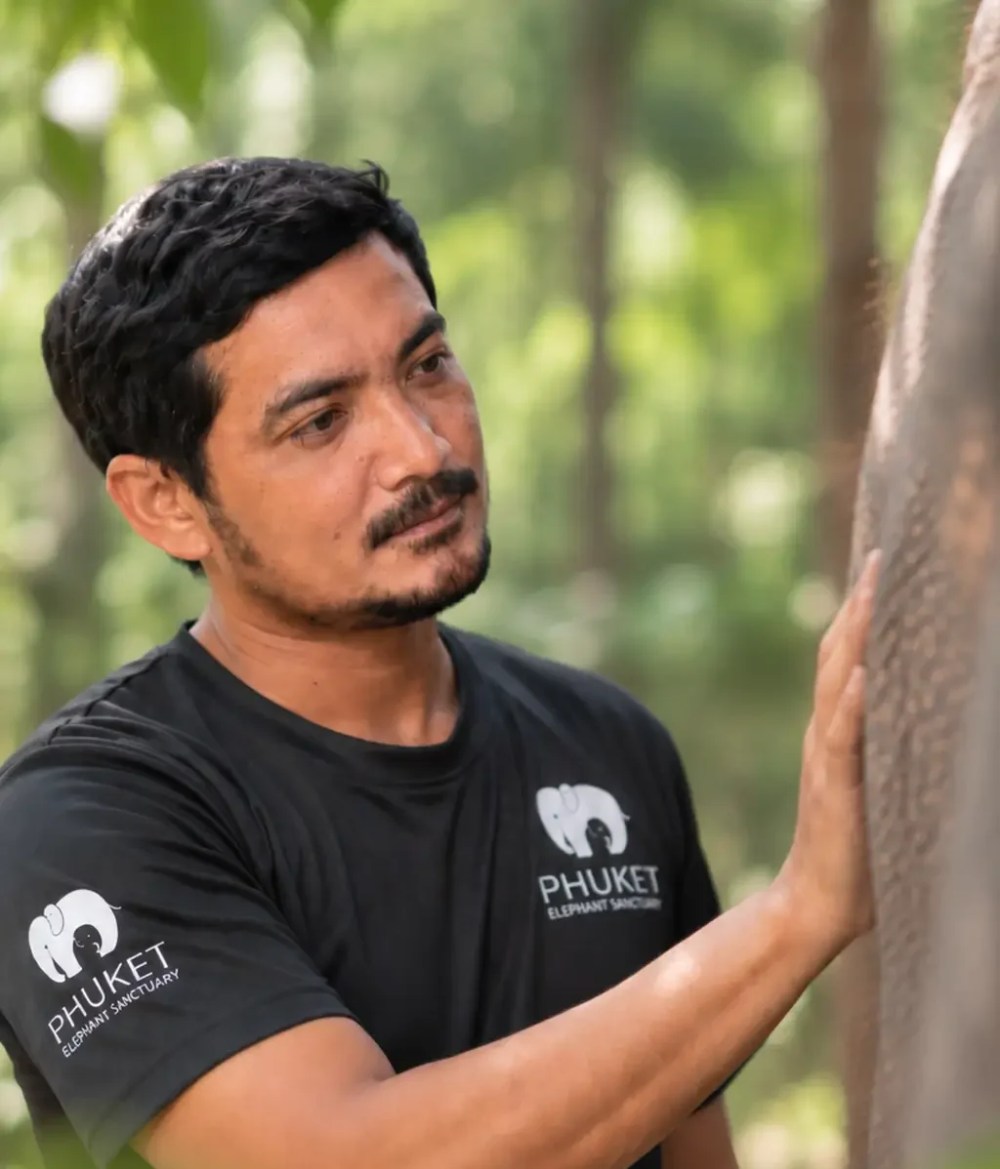
Toomtam (Panupong Aksonniam) holds a Bachelor of Technology in Agricultural Technology from Songkhla Rajabhat University and has been part of the veterinary care team at Phuket Elephant Sanctuary for 10 years. His work ranges from routine health checks and preventive care to supporting treatment, rehabilitation and close observation of elephants with chronic conditions. Having cared for elephants through both recovery and old age, Toomtam brings important continuity to the hospital team and helps colleagues recognize subtle changes in health, mobility and behavior.
Care through collaboration
The hospital was created for the PES herd, but its value reaches further. Where capacity, welfare and clinical circumstances allow, the team can collaborate on cases involving elephants from other camps in Phuket.
Referrals are considered directly by the clinical team. Patient privacy, owner permissions and animal welfare guide what can be shared publicly.
See care in action
Learn how specialist elephant care works in practice. Guests observe respectfully, and active treatment and patient welfare always come first.